
Family Day Care (FDC) offers flexible early learning options that respond to the needs of families and local communities.
On this page:
This model is especially important in regional areas where centre-based childcare is hard to access or does not suit family needs.
At the heart of FDC are educators who are connected to their communities and share the same values as the families they support. These relationships help create safe and familiar environments where children feel supported.
To support the growth of FDC in areas with limited supply, Family Day Care Australia is delivering the Family Day Care Capability Trial (the Trial).
The Trial supports services to better understand their responsibilities when delivering the Child Care Subsidy (CCS) under Family Assistance Law (FAL). It also looks for ways to strengthen the FDC model.
One of the Trial’s work streams is the Educator Recruitment Strategy. This work stream tests different ways to attract new educators to support growth in regional communities.
A key part of the Trial is helping services recruit and keep new educators, particularly in areas where families rely on flexible and local care.

Nature Alliance co-founder and manager Beryl (left) with Bambini Di Natura educator Karin.
One of the Trial participants is Nature Alliance Family Day Care, a provider based in Western Australia.
Nature Alliance has received national recognition for its work. In 2023, Family Day Care Australia named it Service of the Year.
Co-founder and manager Beryl Mort said they hoped to attract more educators through participating in the Trial, particularly in areas where demand for early childhood education and care (ECEC) is growing.
“We want to instil sustainability in regional communities and further explore the benefits of FDC,” said Beryl.
“Some of these benefits include no added [building] footprint, and care delivered in small group settings.”
One of Nature Alliance’s services, Bambini Di Natura, is an example of FDC’s viability. The name Bambini Di Natura means “Children of nature”.
The Spearwood-based service reflects strong values of connection, nature and community. Bambini di Natura provides flexible, home-based education in a warm, nurturing environment.
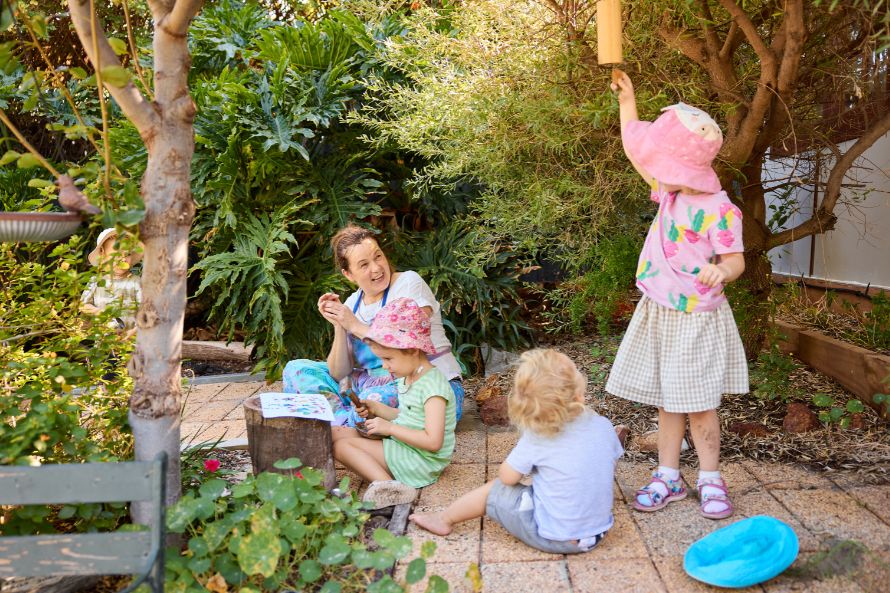
The FDC model allows flexibility for educators and children.
Educator Karin runs Bambini Di Natura. To her, FDC plays an important role in supporting children’s sense of belonging.
One of the strengths of FDC is the ability for educators to adjust care to meet each child’s individual needs.
Karin describes the service as a “home away from home”, where children feel safe, welcome and supported. This environment allows children to learn, grow and explore at their own pace.
Natural outdoor spaces and a home-like atmosphere support children’s learning at Bambini Di Natura. Children move naturally through the day rather than following a strict daily routine. This helps create a relaxed and calm environment.
Karin shared that children often respond to natural signals in their surroundings. For example, the sound of chickens next door signals that it is time for lunch.

Children learn in nature at Bambini Di Natura.
FDC has many clear benefits. Even so, there are always opportunities to improve and strengthen the model.
Many families share that they feel a strong sense of trust, belonging and connection through FDC. Educators and families build their relationship through flexibility, shared values and close communication. This is especially important in rural communities where access to early learning options can be limited.
As the early childhood education sector continues to adapt and grow, FDC remains a strong and valued option for regional and remote communities. Shaped by supporting local family needs, FDC provides children with a safe place to grow and learn close to home. With continued support, there is opportunity for the FDC model to be strengthened, ensuring all families have access to the care they need now and in the future.
The Trial represents a key milestone in this work. Insights from the Trial, particularly through the Educator Recruitment Strategy, will guide the development of targeted supports to support services and educators successfully grow FDC in regional and remote communities.
For more information on the Trial, visit the FDCA website.