
Finding a way to combat antibiotic resistant bacteria is one of the biggest current problems facing modern medicine and health care around Australia and the world.
On this page:
Polymyxin B is an antibiotic of last resort for treating infections; however, certain bacteria are starting to show signs of resistance even to this. A new approach is needed to stop common infections from becoming deadly.
One such approach is to use lipidic nanoparticles to deliver antibiotics directly to the surface of the bacterial cell, where they can be more effective in killing the bacteria. Lipid nanoparticles are fat molecules arranged so that they can be used to encapsulate antibiotics and other drugs.
To test if this could work a compound with antibacterial properties called monolaurin (itself a lipid) was mixed with a nanocarrier lipid. This resulted in lipid nanoparticles that look like tiny soccer balls, known as a noisome. The monolaurin-niosomes have been shown to be effective against certain multi-drug-resistant bacteria, especially when mixed with polymyxin B.
The challenge for this work was to understand why the mixture of an existing antibiotic with a potential new treatment strategy was so effective.
Unique research infrastructure within Australia supports this work
Neutron reflectometry is a valuable tool to understanding the structure of cell membranes at the nanometre length scale. The Platypus and Spatz neutron reflectometry instruments at the Australian Centre for Neutron Scattering (one of NSF’s facilities) were used to understand how the of monolaurin-niosome / polymyxin B treatments were working at the molecular level.
Many bacteria are surrounded in a protective layer of long chains of sugars called polysaccharides. For this work artificial membranes that mimic the properties of the bacterial cell surface, including the polysaccharides, were created and used to understand how the monolaurin-niosome / polymyxin B treatments were able to kill bacteria more effectively.
The neutron reflectometry measurements showed that the monolaurin-niosomes target and remove the outer layer of the bacteria's membrane, effectively mostly removing the outer polysaccharides. This exposes the bacterial cell to polymyxin B to attack and breakdown the cell membrane, ultimately killing the bacterial cell.
Impact
This work shows that antibacterial lipids can be successfully used in combination with nanocarrier lipids to form anti-bacterial nanoparticles. This expands the possible delivery methods of established treatments, prolonging their effectiveness to treat bacterial infections and providing more time to search for new antibiotics.
Neutron reflectometry, funded by NCRIS, was critical to understanding how this new approach works in killing bacterial cells at the membrane level, and will give clues not only to this approach but also to finding others in the future battle against antibiotic resistant bacteria.
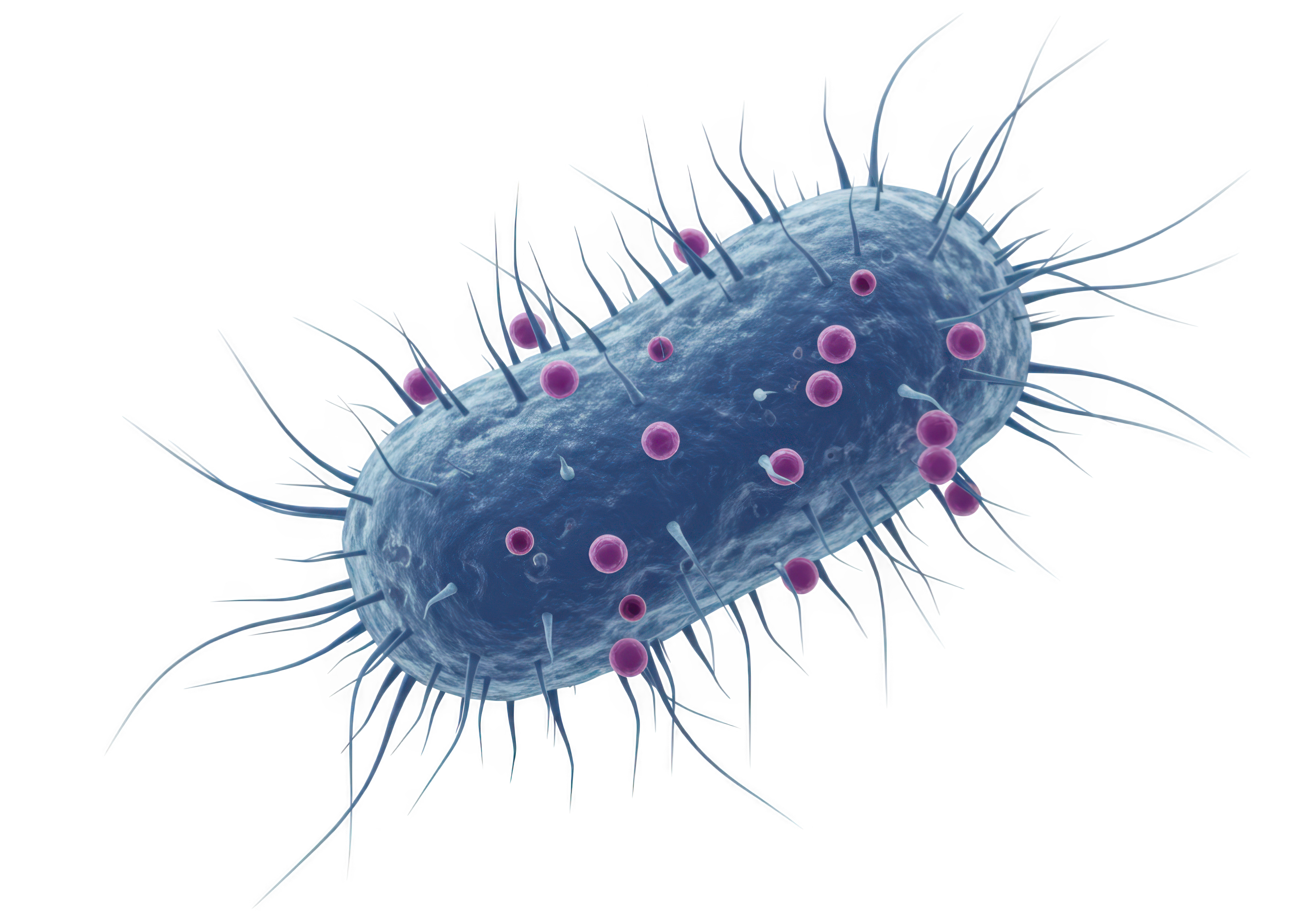
Nanoparticles binding to the surface of a bacterial cell (Adobe stock 1606324860)

The Spatz neutron reflectometer at the Australian Centre for Neutron Scattering with instrument scientist Anton Le Brun adjusting a sample for measurement.