
Building more accurate climate projections by resolving the complex interactions between ice, ocean, and atmosphere.
On this page:
How much will Antarctica's ice contribute to future sea-level rise? Answering this requires climate models that capture the complex physics where ice meets the ocean, one of the biggest sources of uncertainty in current projections.
Predicting Antarctica's future isn't as simple as measuring how much ice is melting today. Scientists also need to understand how glaciers move, how warm ocean water affects them, and how these processes change over time.
Dr Chen Zhao, an ARC DECRA Fellow at the University of Tasmania's Institute for Marine and Antarctic Studies, develops advanced computer models that recreate these interactions, helping scientists produce more accurate predictions of future sea-level rise.
These computationally intensive models rely on supercomputing.
The team is using Setonix to develop high-resolution Antarctic ice-sheet simulations for the Ice Sheet Model Intercomparison Project for CMIP7, part of a global effort to improve sea-level rise predictions.
In parallel, the team is working with Pawsey and Finland's CSC – IT Center for Science to address the technical challenges involved in adapting the Elmer/Ice model to Setonix's GPU architecture. This longer-term work aims to enable more physically complete, high-resolution ice-sheet simulations that would not be practical using conventional computing systems.
The next questions in Antarctic science require computing at a new scale. How will changes in Antarctica shape future sea-level rise and affect coastal communities? By enabling high-resolution simulations and supporting the development of next-generation ice-sheet models, Setonix is helping researchers provide the insights needed for long-term climate adaptation and planning.
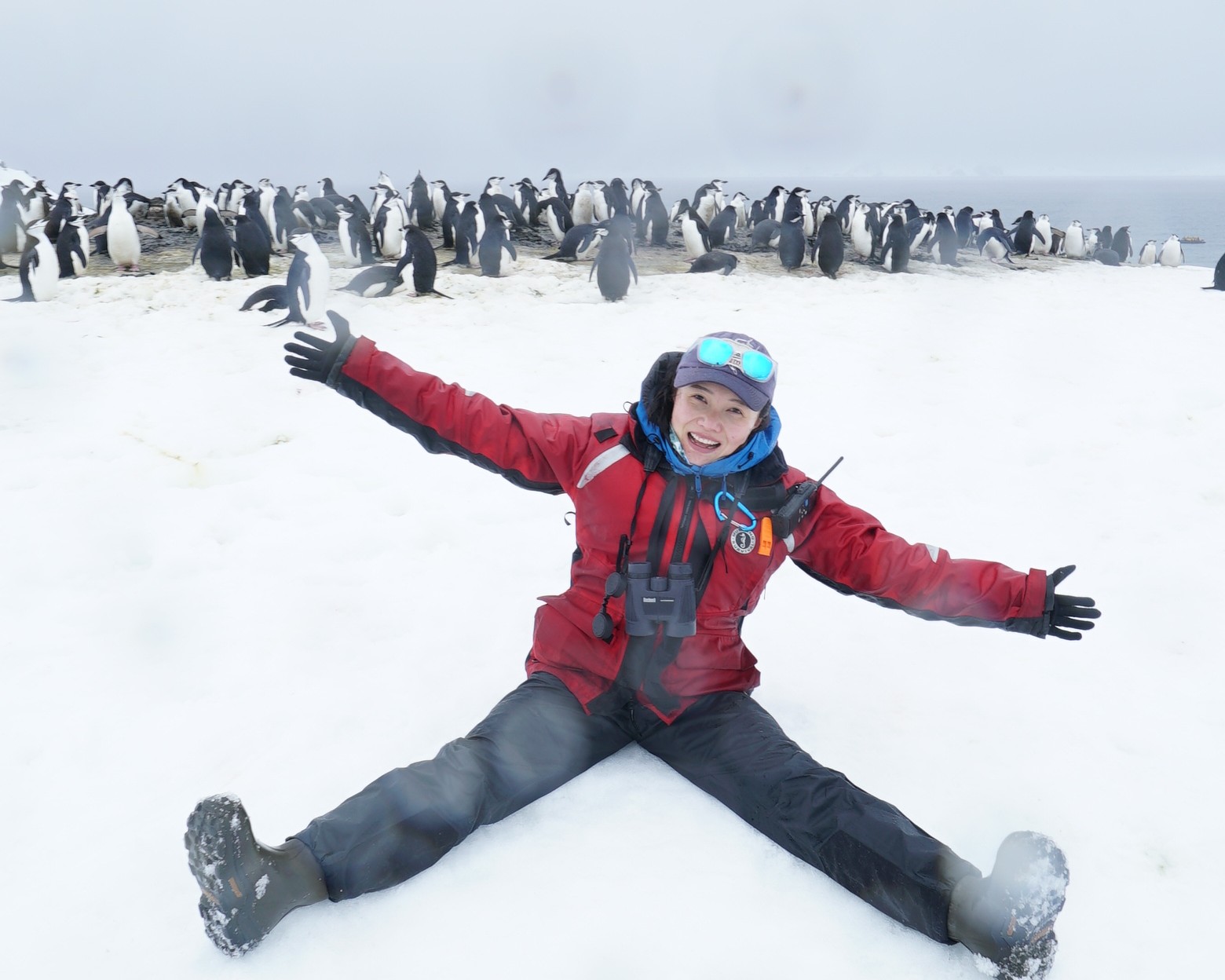
Dr Chen Zhao on the Antarctic Peninsula, with a chinstrap penguin colony in the background. The photograph was taken from an appropriate distance.
Credit: Chen Zhao.
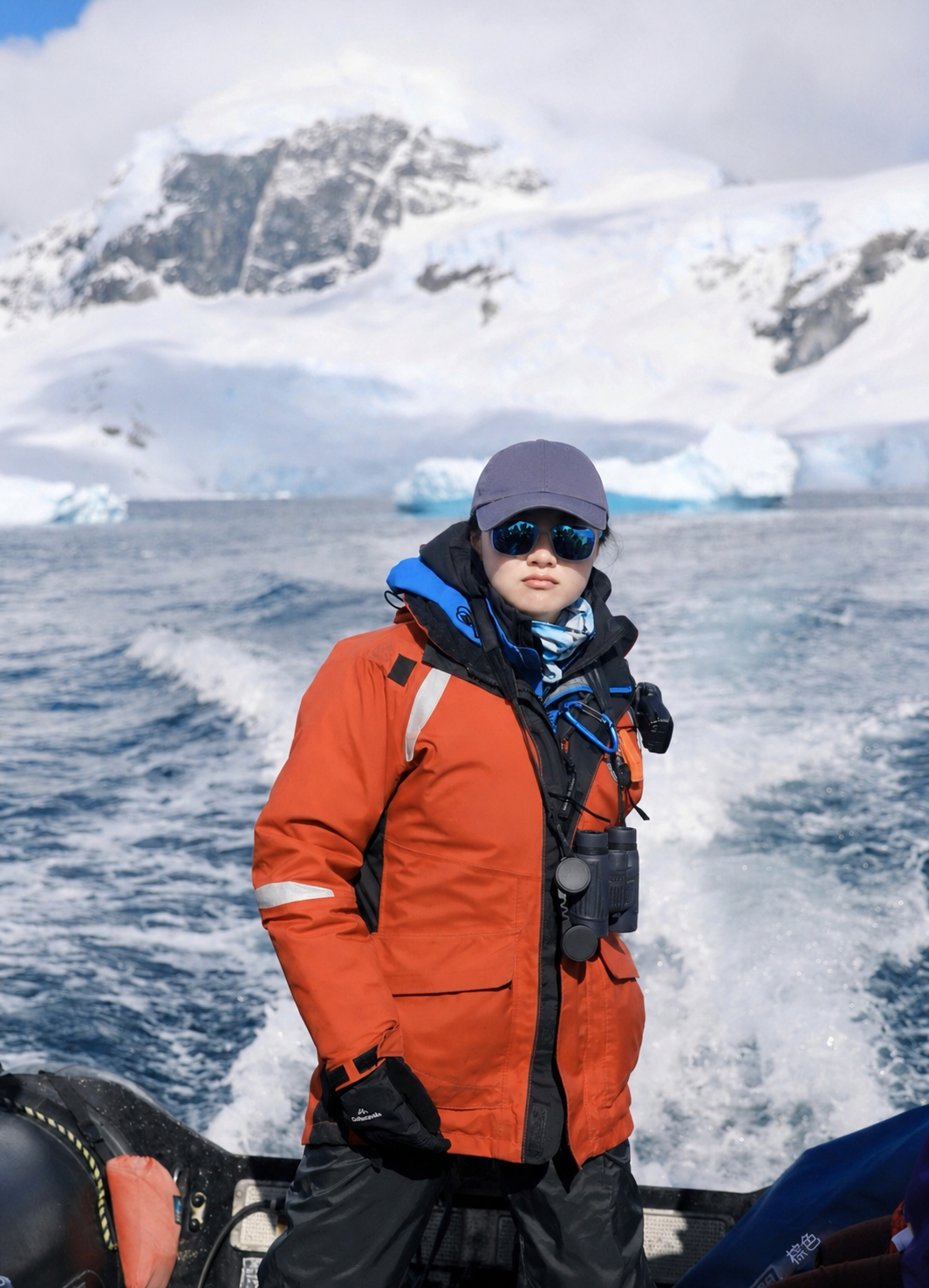
Dr Chen Zhao.
Credit: Chen Zhao.