
On this page:
An array of Australian-made, spider-like antennas designed to explore the distant Universe is now being used to track the satellites above our head.
The Murchison Widefield Array (MWA) is an NCRIS-funded radio telescope at Inyarrimanha Ilgari Bundara, CSIRO’s Murchison Radio-astronomy Observatory in Western Australia. Unlike traditional “big dish” telescopes, the MWA consists of more than 8000 small antennas, each tuned to see in radio light between 70 and 300MHz.
Listening to the cosmic radio
One of MWA’s key science goals is to probe the very early Universe, just one billion years after the Big Bang, in search of signals from hydrogen gas transforming into the first stars.
In over 10 years, the MWA has enabled the training of a highly skilled workforce of Australian researchers and technicians in preparation for the SKA-Low telescope, under construction at the same site. To date, the MWA has collected over 50 million gigabytes of data.
Searching closer to home
Through a partnership with Australian Defence and Space company Nova Systems, MWA lead institution Curtin University has applied MWA technology and radio astronomy techniques for space domain awareness (SDA).
The proliferation of satellites in low Earth orbit has resulted in a crowded space environment, increasing the risk of collisions and space debris that can have catastrophic effects on Earth. SDA enables satellite operators, space agencies, and defence organisations to detect, track, identify, and characterise orbital objects to keep our skies safe.
Leveraging expertise from MWA, the team constructed a multi-function passive sensor system at the Nova Systems Space Precinct in South Australia. The system, known as InteRFeX, delivers 24/7, all-weather, all-sky monitoring of space, using imaging and signal processing techniques honed by Australian radio astronomers.
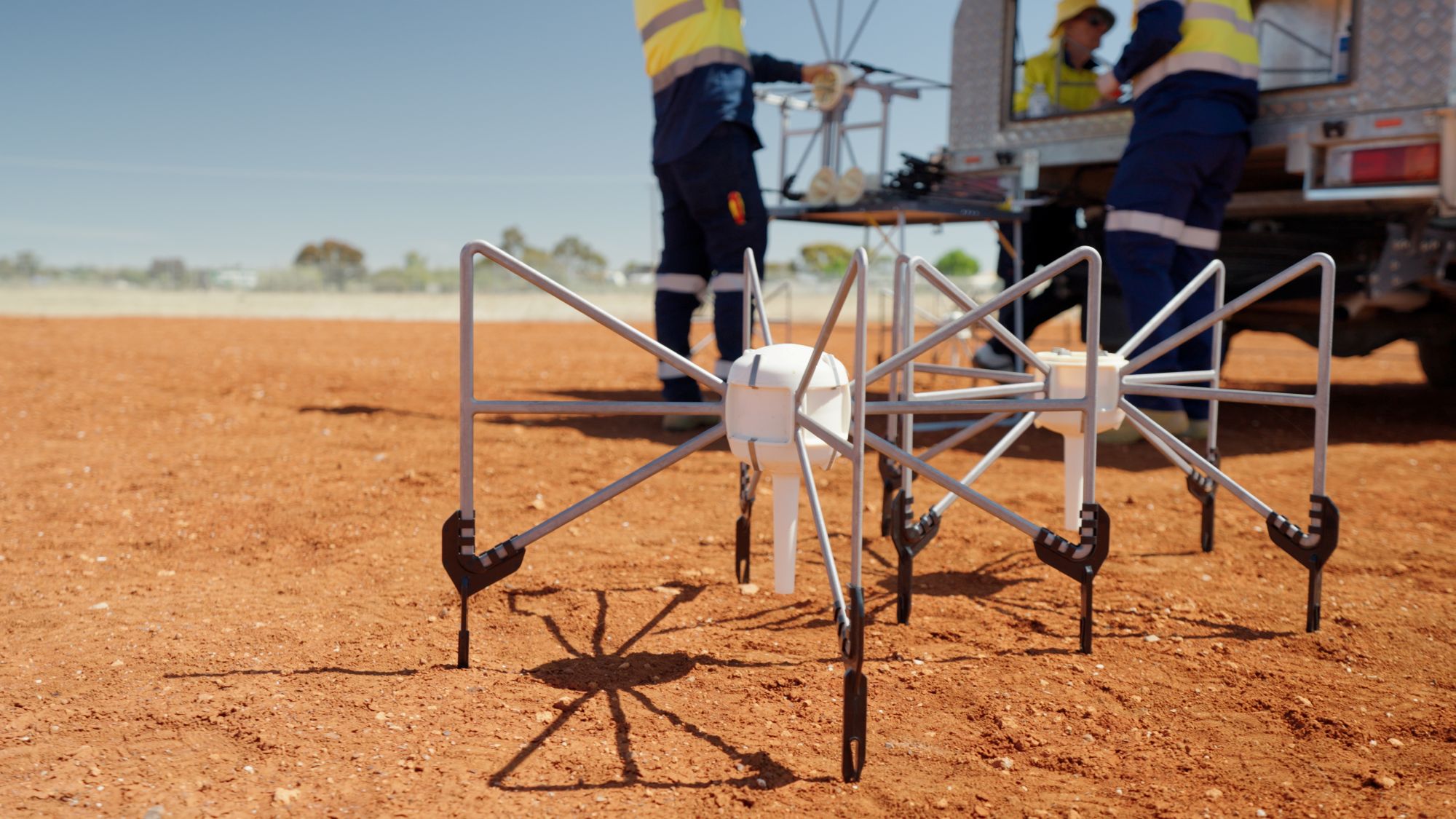
The InteRFeX satellite tracking system uses NCRIS-supported technology developed for the Murchison Widefield Array.
Credit: Nova Systems
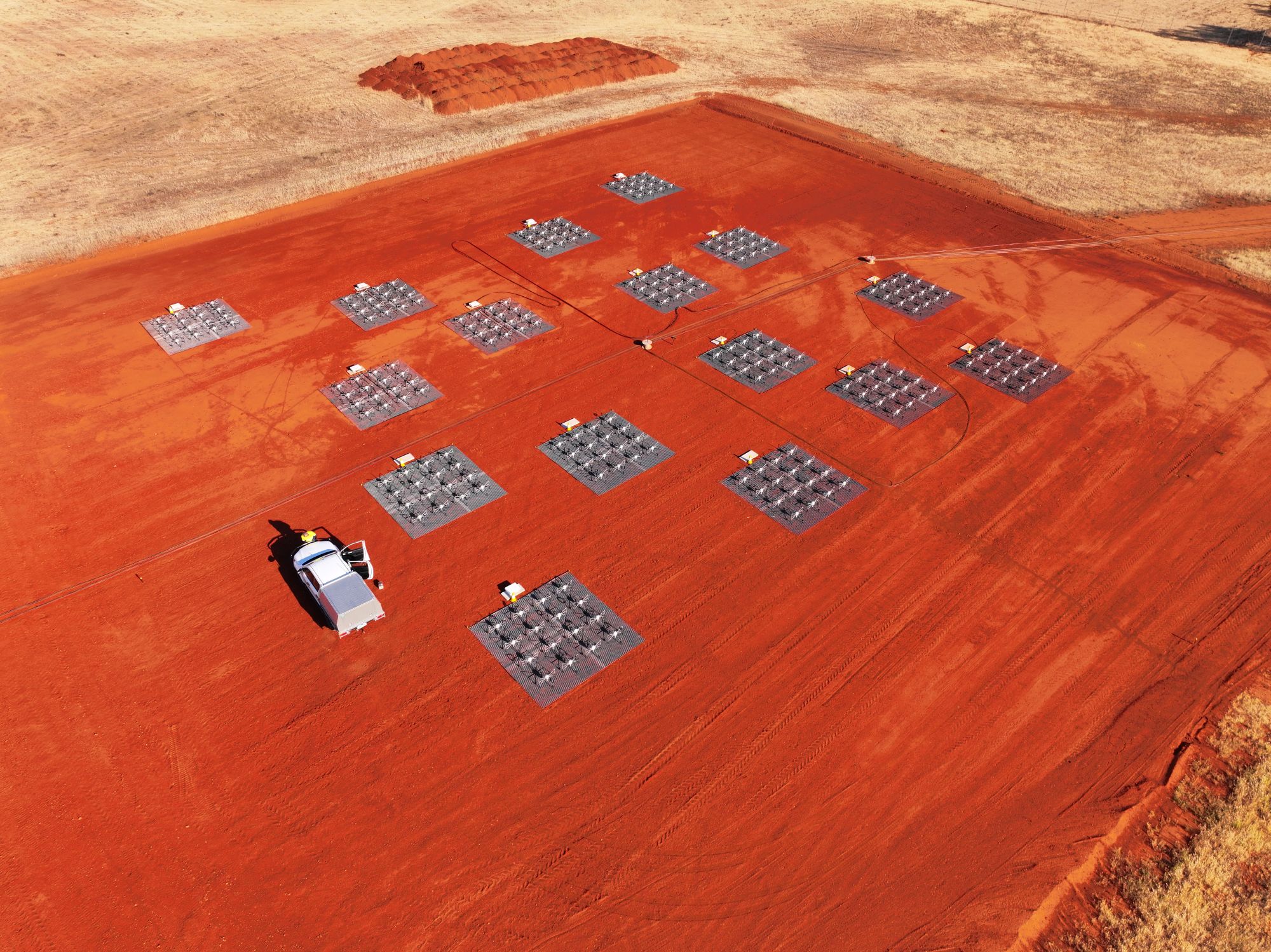
The InteRFeX antennas provide 24/7, all-sky, all-weather monitoring of space objects.
Credit: Nova Systems