
Parks Australia and the South Australian Department for Environment and Water (DEW) recently collaborated on an expedition to investigate one of Australia's most remote and least understood marine environments.
On this page:
During a two-week voyage aboard the MRV Ngerin, the Great Australian Bight Marine Biodiversity Expedition 2026 documented habitats and marine biodiversity across the Great Australian Bight, providing better understanding of how species and habitats are connected across the region.
Researchers completed 126 Baited Remote Underwater Video Systems (BRUVS) deployments and collected 56 environmental DNA (eDNA) samples, including along the Bunda Cliffs and Nuyts Reef Sanctuary Zones. These surveys will generate valuable new information on demersal fish assemblages, habitat condition and ecological connectivity across Commonwealth and State marine parks.
The expedition successfully tagged six white sharks in State waters using a combination of acoustic, satellite and fin-mounted tracking technologies, and strengthened the regional shark monitoring network through the deployment and recovery of acoustic receivers. Before departing Ceduna and heading offshore, Traditional Owners and Rangers from the Far West Coast Aboriginal Corporation visited MRV Ngerin to discuss future opportunities for involvement in marine science and Sea Country monitoring.
With limited large-scale biodiversity inventories undertaken across the remote marine parks in the Bight, expeditions like this are essential to strengthening our understanding of Australia's marine estate. They provide important information to support future monitoring, conservation and collective marine park management.
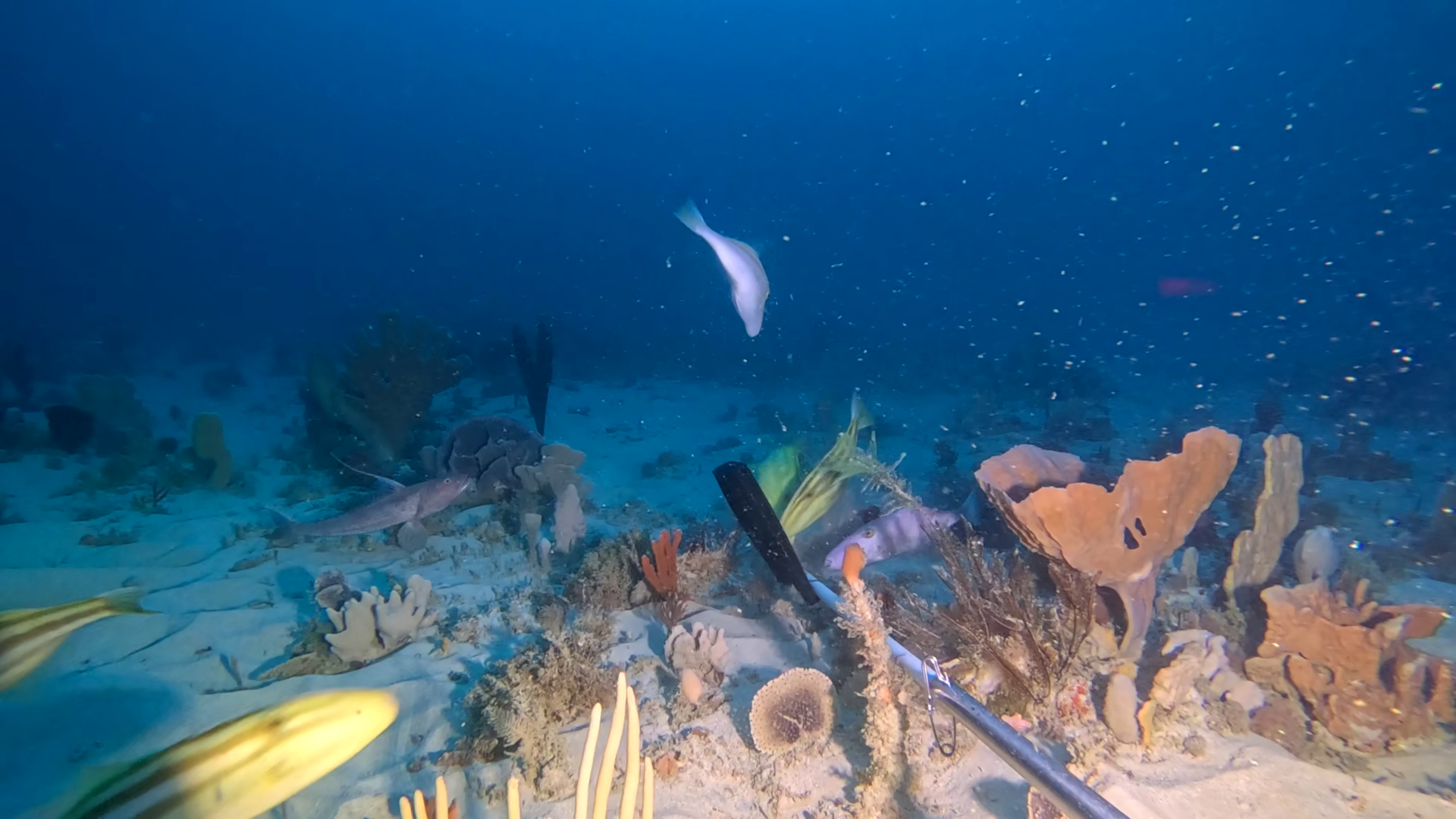
Sponge reef in the Great Australian Bight region. Ocean Leatherjacket fish are visible.