
Pioneering research provides lifechanging access to new scans for all prostate cancer patients.
On this page:
Challenge
Prostate cancer is the most commonly diagnosed cancer for men in Australia. Until recently, diagnosis relied upon physical examinations, biopsies, and conventional imaging which can be less effective in detecting early-stage cancers, leading to diagnosis at more advanced stages, and challenges in identifying spread.
Solution
Prostate-specific membrane antigen (PSMA) PET imaging has revolutionised the way prostate cancer is detected and treated, pinpointing tumours in the body.
In collaboration with the Australian Radiopharmaceutical Trials Network (ARTNet), NIF molecular imaging infrastructure and expertise supported the proPSMA multi-centre study which provided the evidence to make these scans available to patients nationally.
The scans use an agent that attaches to cells with high amounts of PSMA (a protein present in prostate cancer cells), enabling clinicians to identify and target the treatment of tumours with precision using molecular imaging, as well as track the spread more effectively.
Impact
This world-leading collaboration has provided Australians with life-changing access to precise diagnostic scans. In July 2022, access was opened for all Australians to PSMA PET scans for high-risk and recurrent prostate cancers through the Medical Benefits Schedule.
“We think this is going to revolutionise the diagnosis of prostate cancer,” said Prof Michael Hofman, who leads the prostate cancer theranostics and imaging centre of excellence at the Peter Maccallum Cancer Centre
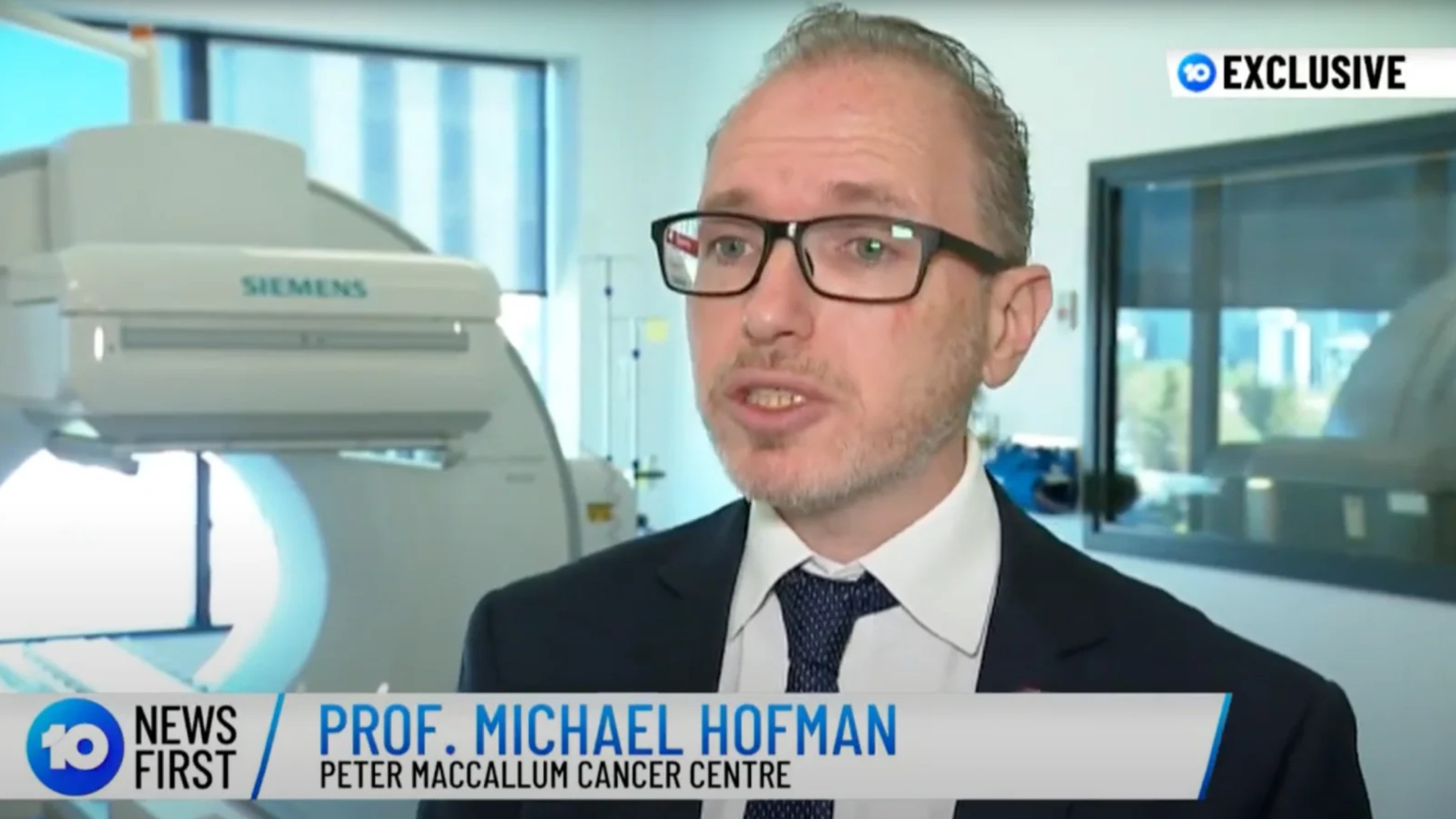
Prof Michael Hofman speaks to10 News about the study that provided the evidence to make PSMA PET scans available to patients nationally.
Credit: 10 News